In our nation, soccer is nothing short of a cultural necessity. For some, it’s a Sunday pastime. A social calling for others. And for others still, it’s a source of competition. But for some, soccer is a way of life, as essential as drawing a breath of fresh air.
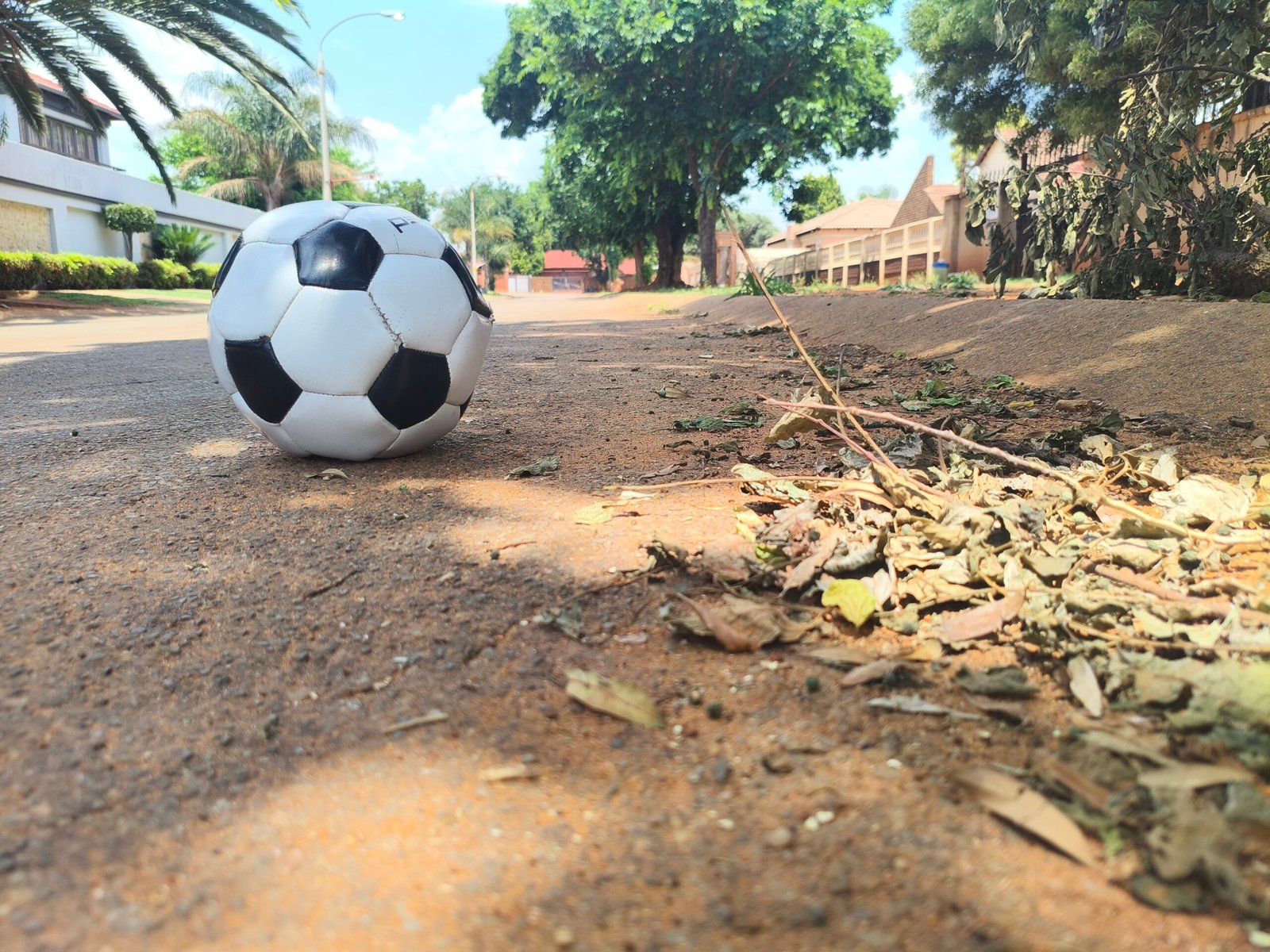
Dawn Park has many soccer lovers, particularly among young people who can often be seen kicking a ball in the streets. However, some struggle to find suitable places to play. When they turn to residential streets, their games can lead to conflict with homeowners concerned about property damage, dirt, noise and repeated interruptions.
Young soccer players in Dawn Park who are repeatedly chased away from residential streets face difficulties finding somewhere to continue playing. Those who can afford to travel seek playing opportunities outside the community. However, those who cannot may be left without a regular place to play. The situation has raised questions about the availability and maintenance of public sports facilities in Dawn Park. The municipality acknowledges that existing facilities are insufficient for the size of the community. However it explains that financial constraints and staffing shortages are barriers to maintaining and expanding them.
Searching For A Place To Play
About a year ago, a group of around 30 young soccer players would gather in a residential street every Sunday evening to play soccer. Among them was Katlego Mathiane, a fitness enthusiast who describes soccer as an essential part of his weekly routine. As he puts it “I can’t not play soccer during the week, my week would be off.”
The Sunday games were something the players looked forward to. According to Katlego, the gatherings had become such a regular part of their routine that they barely needed to arrange them.
“We didn’t even talk about it. There was a group chat but we didn’t even need to talk about it in the group chat,” he recalls.
What began as casual street soccer games gradually became more organised. With more players arriving each week, the group introduced a timer and limited each match to eight minutes. This allowed everyone an opportunity to play.
“Every Sunday was street football,” Katlego says.
Today, however, those Sunday gatherings are no longer part of his routine. Katlego says he has not played soccer on the streets for about a year. This happened after homeowners chased the group away from the street where they had been playing. According to him, the group struggled to find another suitable place because residents had chased them away from several streets.
“Soccer is dead cause we have nowhere to play,” he says.
Playing in residential streets also brought its own challenges. Katlego explains that when a ball landed in a homeowner’s yard, some residents refused to return it. That would bring the games to an abrupt end. However, he acknowledges that residents also had valid reasons for objecting to the games.
He recalls one homeowner who was concerned about dust from the street entering the house. On another occasion, the players encountered a homeowner who was building a garden outside the property. Rather than continue playing there, the group decided to leave and look for another place.
Public parks could have offered an alternative, but Katlego says their condition also presented difficulties at the time. He describes the grass as inconsistently maintained and says cows were often brought to graze in the park, leaving cow dung scattered across the playing area.
“There’s so much cow dung there. I can’t even play. There’s literally cow dung everywhere,” he says.
With limited options in Dawn Park, some players began travelling outside the community to find somewhere to play. Katlego says many went to Sunward where they found refuge in one of its sports facilities. Eventually they established a team there and they’d recruit other young players whom they’d find at street corners. But travelling there came at a cost that not everyone could afford. Those who could not afford to travel there regularly eventually lost the opportunity to play as often as their peers.
For Katlego, the loss of a regular place to play means more than missing a weekly activity. He credits football with helping him maintain his fitness and develop discipline.
“Soccer is also where I got most of my discipline from. I wouldn’t be as fit as I am if it wasn’t for soccer,” he says.
Without the sport, he believes his daily routine might look very different. “If it wasn’t for soccer, I think I’d be a guy who’s always inside … on TikTok all day.”
Although Katlego recognises the concerns of homeowners, he believes Dawn Park needs a dedicated space for soccer. A space where young people can play without repeatedly having to move from one place to another. He also sees the sport as a way to encourage young people to spend their time more constructively.
“Having an outlet like that can remove kids from the corners,” he says.
The Inconvenience to Homeowners
Tuki Makoro is one Dawn Park homeowner who believes that soccer can benefit young people in Dawn Park. Tuki has experienced the frustrations of having street soccer played outside his home. However, he has no objection to the sport and admits that there were times when he considered joining the players.
“I mean, there were times when I would have wanted to join them,” he recalls.
His concern, however, was with where the games took place and how they affected his household.
Tuki recalls a group of young players who gathered in the street directly outside his house sometime last year. According to him, the players appeared to favour the spot because it was the only place with a working streetlight, allowing them to continue playing till late.
The location, however, came with a recurring inconvenience. Whenever the ball went over his wall and into his yard, the players would knock on his door to retrieve it, regardless of the time.
“When the ball jumps the wall, it doesn’t matter what time it is, they’d still knock and ask for their ball back,” he says.
Tuki recalls becoming increasingly frustrated by the repeated interruptions.
“But guys, I think this is too much for me,” he would tell them. “Now you’ve turned me into your ball boy, and it just cannot be.”
He says the only time he would get some relief was when the streetlight stopped working. On one occasion, the players moved to a nearby street, but Tuki says he noticed that residents there also appeared to become agitated by their presence. Eventually, the players returned to the spot outside his house.
“It was really getting on to one’s nerves,” he says.
LOCAL ADVERT

Celebrate More. Stress Less. 🥂
Leave the catering to the professionals!
Beyond the repeated knocks at his door, Tuki was also concerned about the players jumping over neighbouring walls to retrieve their balls. He says he would tell them that their actions were disrespectful towards residents.
“This is being disrespectful. You can’t jump over people’s walls in this way. This is downright disrespectful,” he recalls telling them.
Despite his frustrations, Tuki acknowledges that the players’ presence also had a positive side. He believes that while the games were taking place, the activity on the street discouraged people from entering residents’ yards unlawfully.
“Tsotsis would come much later, maybe after they’ve left, but during the time they were playing soccer, you’d know that no one would venture into other people’s yards,” he says.
Tuki remains supportive of encouraging young people to participate in sport. He believes it can be particularly beneficial for young people who have not yet become involved with drugs and alcohol. Like Katlego, he also believes Dawn Park needs more spaces where young people can participate in sport.
Although his experience highlights the inconvenience street soccer can cause homeowners, Tuki’s position is not against the sport itself. Rather, his account illustrates the tension that arises when young people have limited places to play and residential streets become an alternative.
Who Is Responsible for the Playing Fields?
The need for more recreational facilities in Dawn Park has also featured in recent meetings held by candidates contesting for Ward 43 in the upcoming local elections. Both candidates from the ANC and Action SA have spoken about the need for additional recreational spaces in Dawn Park.
According to the City of Ekurhuleni, Dawn Park has only one formal sports facility, the tennis clubhouse. This facility has two courts used for tennis, netball and six-a-side soccer. The municipality also identified two informal grounds in the area.
The municipality acknowledges that these facilities are insufficient for the size of the community. However, it says there are currently no plans to build additional sports facilities because of the financial constraints facing the council.
“Furthermore, the department is currently struggling to maintain the current existing facilities in all three regions, notwithstanding the high vacancy rate in terms of manpower to work at those facilities,” explained the office of MMC Siyabonga Moloi, which is responsible for social services, including sports and recreation.
The challenges of finding and maintaining a suitable playing space are also familiar to Ubhejane Legends FC, a local football team in Dawn Park. When the team struggled to find a place to practise, its members took matters into their own hands by contributing money towards cleaning and maintaining an open veld near their homes.
The club’s founder and player, Simphiwe Msibi, believes Dawn Park has enough open spaces to accommodate sporting activities. In his view, the problem is that these spaces are not properly maintained.
Msibi says the team has repeatedly approached the councillor and the municipality about the condition of the ground they use, but has yet to see the maintenance they are seeking.
“We have asked the councillor several times, also we have tried to go to the municipality, still the ground is not maintained … we don’t have a ground that is maintained in Dawn Park,” he says.
While the team has contributed towards maintaining its playing field, Msibi believes that responsibility for public recreational spaces should not rest on residents alone. He calls for a more hands-on approach from government, regardless of which political party governs the ward.
“We need them to be on board. We need them to maintain these grounds for us,” he says.
Like Katlego and Tuki, Msibi believes football can have a positive influence on young people. He argues that poorly maintained facilities can prevent children from pursuing their sporting ambitions and calls on residents to encourage the government to maintain recreational spaces.
“There are kids here who have dreams to be swimmers, who want to be soccer players, so if these facilities are not maintained, that kid’s dream is destroyed, it will die because of a lack of facilities,” he says.
A Way Forward
For young players struggling to find somewhere to play, Msibi encourages them to make use of available open spaces, organise themselves and seek support from others in the community.
“Try and go to those open spaces … try and organise yourselves, try and clean up that space … try and ask someone … try and join a local team in one of those fields, try, try, try.” he advises.
However, he warns that continuing to play in residential streets can create risks and tensions with residents.
“If you continue playing soccer on the streets, there’ll be an accident, the neighbours are not happy, everyone is not happy,” he says.
For Dawn Park’s football players, the search for a suitable place to play involves more than finding an open patch of ground. It also raises questions about how existing recreational spaces are maintained, what additional facilities the community needs, and how residents and local government can work together to ensure that young people have somewhere to pursue their interests.